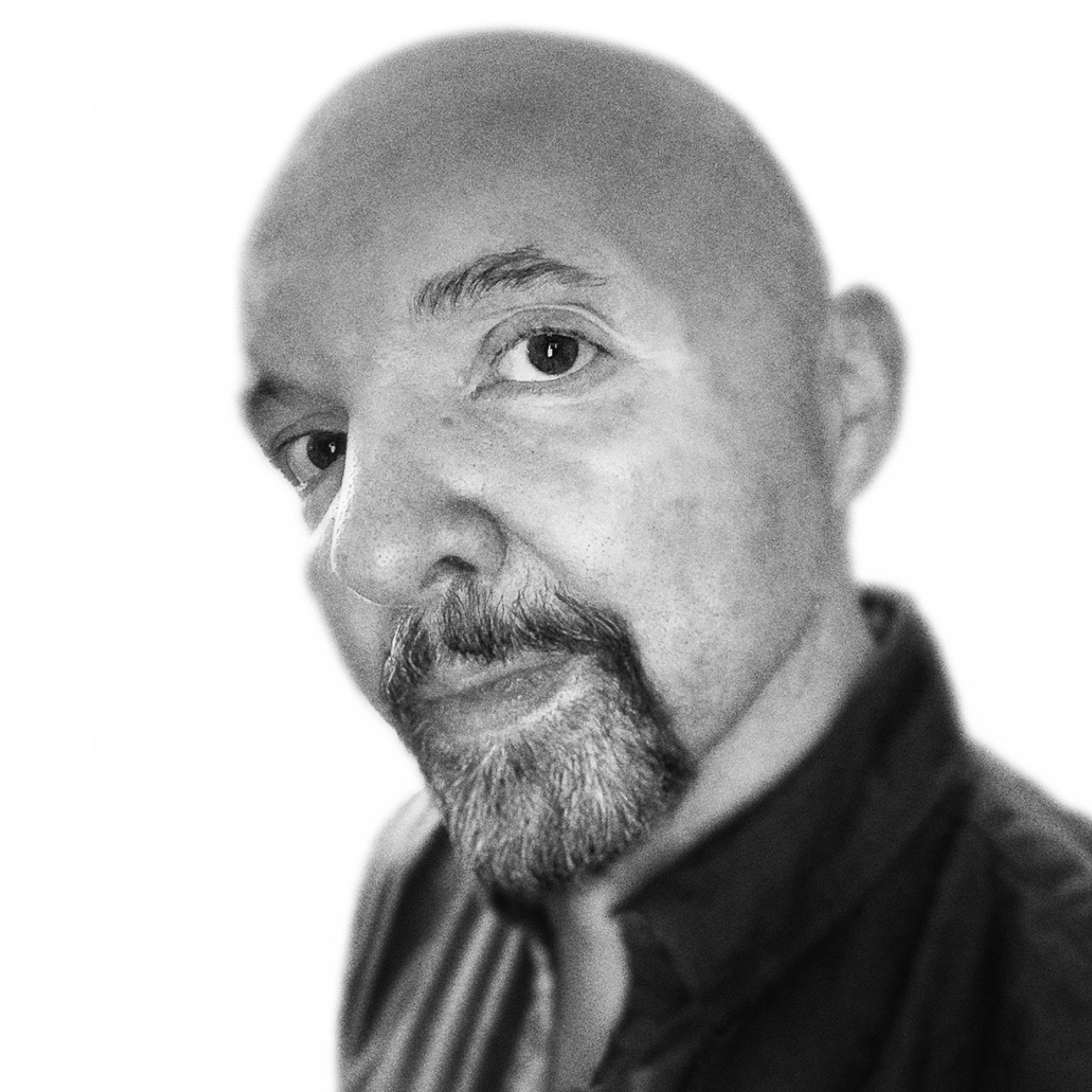
There is a particular stillness I try to create in my portraits. Not silence exactly — more like a held breath. The kind of pause that happens just before someone reveals something true. For me, that pause is built with light.
Ironically, when I was at college, I was told "You can always spot someone who knows nothing about photography when their opening remark is, 'I love the light.' It's the conversational equivalent of mentioning the weather when everything else has dried up. Safe. Vague. Banal." Light becomes a throwaway compliment rather than the foundation of the image.
But I quickly learnt that this throwaway line in a photographic course introduction was far from the reality.
I don't use it simply to flatter or to create spectacle. It has to be intentional. Controlled. Sculptural. I approach light the way a painter approaches a loaded brush — carefully, sparingly, fully aware that what I choose to leave in shadow matters just as much as what I illuminate. Think of me as the Caravaggio of the camera.
My portraits are often stripped back to their essentials: a dark background, a face, and a sculpted source of light. That restraint is deliberate. When I limit the light, I remove distraction. The viewer isn't invited to wander; they're guided. The fall of light across a cheekbone, the edge of a jaw dissolving into darkness, the quiet glint in an eye — none of it is accidental. Every highlight and every shadow is a decision.
- Ringo Starr
That discipline is what allows the work to stand apart. I let the shadows exist. I don't flatten a face with even brightness or erase history with excess illumination. Instead, I shape the face with directional light, allowing texture, age, and experience to remain visible. Those details are the story. Light, for me, is psychological.
A narrow beam can heighten intensity. A softer wrap can reveal vulnerability. If one side of the face slips into shadow, it introduces tension — a reminder that no one, no matter how well known, is entirely knowable. There is always something just beyond view. My lighting choices acknowledge that duality: the public persona in the light, the private self lingering at its edge.
Over time, I've stayed consistent in this approach because consistency builds a visual language. When someone sees one of my portraits, I want them to recognise it instinctively — the contrast, the depth, the controlled drama. That recognition comes from understanding not just how to light a face, but how to use light to shape identity.
With it, it becomes revelation.
So when someone tells me they "love the light," I hope they mean more than the weather. I hope they're responding to the decisions behind it — the restraint, the tension, the honesty it allows. And in my work, revelation lives in the space between illumination and shadow.
Written by
— Andy
